
A lender inspection for an apartment is a scheduled site visit, carried out by or for the lender or loan servicer, that verifies the physical condition, occupancy, and management of a multifamily property pledged as collateral. The inspector walks the exterior, mechanical rooms, common areas, and a sample of units, then scores the asset and lists deferred maintenance. Nothing about it resembles a home buyer's due diligence report: the audience is the loan file, not the purchaser.
Owners usually ask what is a lender inspection for an apartment after a servicer notice arrives with two weeks' warning and no explanation of what the visit can change. The honest answer is that it can change quite a lot, including reserve funding, repair deadlines, and how a future refinance is priced. Understanding the mechanics, the timing, and the appeal path before the inspector arrives is the difference between a routine file note and a covenant problem.
Key takeaways
- A lender inspection for an apartment is a physical site visit that confirms the collateral's condition, occupancy, and use of loan funds match what the loan documents assume.
- Most lender inspections are contractual rather than optional, because the loan agreement itself grants the lender a right of access and inspection.
- Stabilized permanent loans usually trigger inspections every one to three years, while construction and renovation loans are inspected on a draw-by-draw basis.
- Findings are opinions recorded at a moment in time, and a borrower can rebut them with dated photographs, paid invoices, and third-party engineering reports.
- Deferred maintenance flagged in an inspection often leads to a replacement reserve escrow or a repair covenant rather than an immediate default.
What Is a Lender Inspection for an Apartment Property?
A lender inspection for a multifamily property documents whether the asset still supports the debt secured against it. The inspector rates roofs, facades, parking, life safety systems, and unit interiors, notes vacancy and down units, and photographs anything that could impair value. On construction or renovation credit, the same visit doubles as a draw inspection that confirms completed work matches the budget line items being funded.
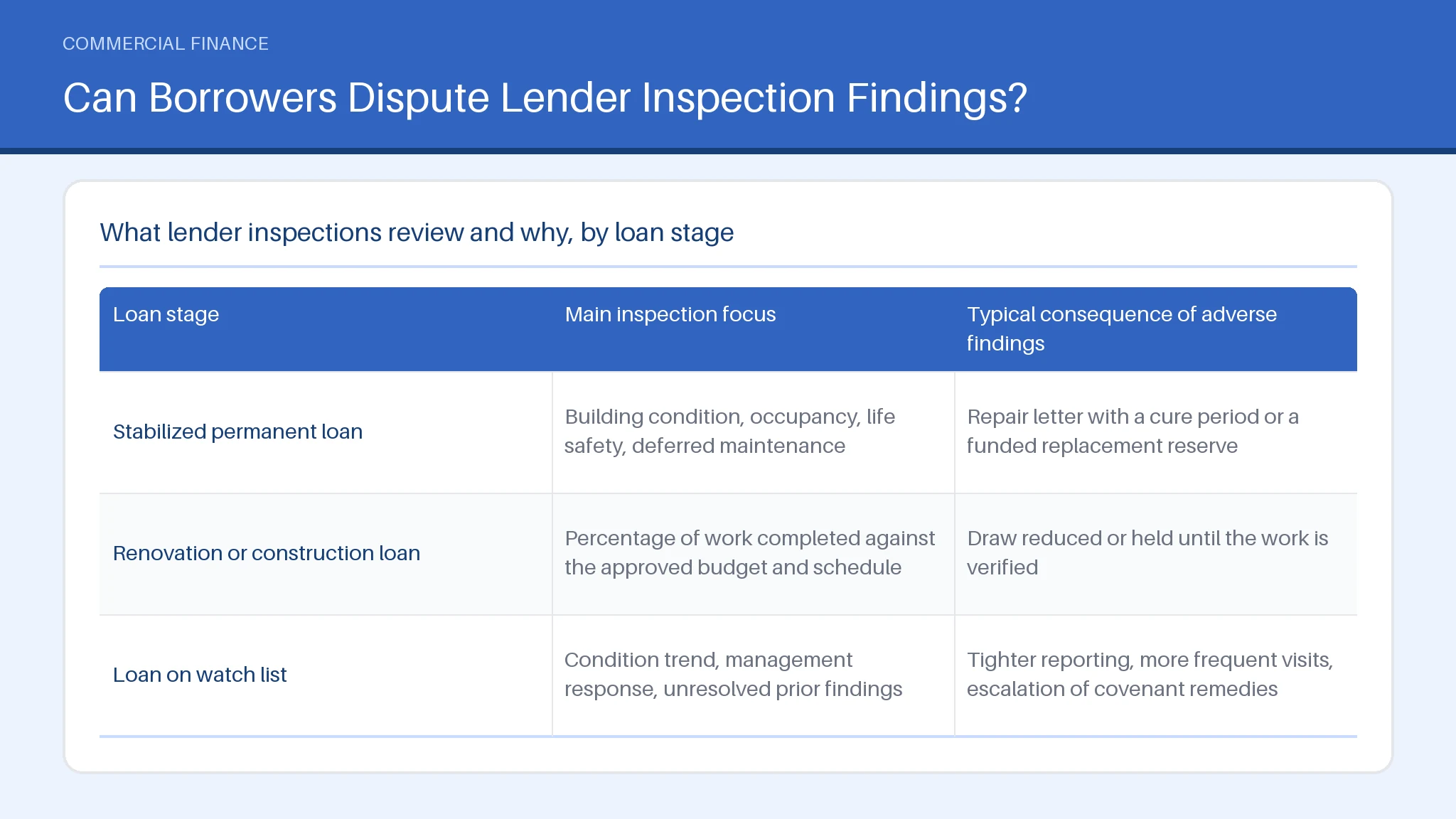
The distinction matters because the consequence of a poor rating differs by loan stage. Understanding what is a lender inspection for an apartment means understanding that a borrower on a stabilized loan faces reserve escrows, while a borrower mid-renovation faces a withheld draw. Severe, uncured physical deterioration can constitute a covenant breach and, in rare cases, a non-monetary default.
| Loan stage | Main inspection focus | Typical consequence of adverse findings |
|---|---|---|
| Stabilized permanent loan | Building condition, occupancy, life safety, deferred maintenance | Repair letter with a cure period or a funded replacement reserve |
| Renovation or construction loan | Percentage of work completed against the approved budget and schedule | Draw reduced or held until the work is verified |
| Loan on watch list | Condition trend, management response, unresolved prior findings | Tighter reporting, more frequent visits, escalation of covenant remedies |
Is a Lender Inspection for an Apartment Mandatory or Optional?
Lender inspections are effectively mandatory on almost every apartment loan, because the loan agreement grants the lender a contractual right of entry and obliges the borrower to cooperate. There is no opt-out clause to negotiate after closing. The process runs in a predictable sequence: the servicer issues notice, requests a rent roll and maintenance log, coordinates unit access with the site manager, completes the walk, then issues a written report and rating.
What is a lender inspection for an apartment in practical terms is therefore a compliance obligation with a documentation component. Refusing or repeatedly delaying access is itself a breach. Renovation-stage loans go further and condition each funding release on a verified inspection, so cooperation directly controls cash flow.
How Often Are Apartment Lender Inspections Scheduled?
Apartment lender inspections occur on a cycle set by loan size, loan type, and file risk, most commonly annually for larger or watch-listed loans and every two to three years for smaller, well-performing ones. Agency and securitized multifamily loans generally follow a fixed servicing calendar. Balance sheet lenders often inspect less formally but more opportunistically.
Three triggers sit outside the calendar. A material casualty such as fire, flood, or storm damage prompts a prompt visit. A payment delinquency, a coverage ratio decline, or a sharp occupancy drop moves the file forward in the queue. A loan assumption, modification, or refinance request also brings an inspector out because the lender needs current condition data before repricing risk.
Understanding how these visits are conducted removes most of the anxiety. A single inspector, or a small team on large assets, spends a half day to two days on site. They tour exteriors and roofs, sample roughly ten percent of units including vacant and down units, review the maintenance work order history, and interview the on-site manager. The inspector writes the report; the servicer decides what to do with it.
For what is a lender inspection for an apartment, the safest approach is to match the advice to the concern, current routine, barrier tolerance, and whether medical review is needed.
Can Borrowers Dispute Lender Inspection Findings?
A borrower can dispute inspection findings, and disputes succeed most often when they correct a factual error rather than argue about judgment. Findings are a snapshot taken by one person on one day, so a borrower who documents conditions continuously starts from a stronger position. Photographs with metadata, paid contractor invoices, and permit records frequently resolve a disputed item outright.
Timing is the constraint most owners miss. Servicing agreements typically allow a short comment window, often ten to thirty days, before the rating is finalized in the loan file. A borrower who misses that window carries the rating into the next annual review and into any refinance underwriting. The practical rule is that every borrower should treat the draft report as a deadline, not a notification.
How to Appeal an Unfavorable Property Condition Rating
An effective appeal answers each flagged item in writing, in the inspector's own order, with evidence attached. Cite the report item number, state whether the condition was cured, misidentified, or scheduled, and attach the invoice, warranty, or dated photograph that proves it. Where the disagreement is technical, such as remaining roof life or structural cracking, a licensed engineer's letter carries far more weight than owner commentary.
Ask the servicer to record a re-inspection or a desk review once repairs close out. Removing a resolved item is cheaper than defending it at every future review, and it keeps the file clean for a later inspector.
Annual, Triennial, and Event-Driven Inspection Timing
Inspection timing falls into three patterns worth planning around. Annual cycles apply to larger loans, watch-listed credits, and most agency-serviced multifamily debt. Triennial cycles apply to smaller, seasoned loans that have paid as agreed and passed prior reviews without open items. Event-driven visits follow casualty losses, delinquency, assumption requests, or a condition trend the servicer wants verified before a default becomes likely.
A borrower who knows which pattern applies can sequence capital spending so major systems are addressed before the inspector arrives rather than after. That sequencing also improves the condition narrative an inspector records, which follows the property into future multifamily loan underwriting.
Summary
Apartment lender inspections verify collateral condition on a cycle you can anticipate, and their findings are contestable with dated evidence. CRE Loans USA publishes commercial real estate finance guides and matches property owners with independent third-party finance providers who make all lending decisions. continue with the qualification form below.
Frequently asked questions
How to prepare for a lender inspection?
Preparation starts with paperwork, not paint. Assemble the current rent roll, the maintenance work order log, service contracts, warranties, and invoices for recent capital work. Confirm unit access with residents in advance so the inspector is not turned away, clear mechanical and electrical rooms, and make sure life safety equipment such as extinguishers, alarms, and emergency lighting has current inspection tags. Walk the property yourself a week ahead and fix the cheap, visible items.
Why do apartments do lender inspections?
Lenders inspect apartments because the building is the collateral and its condition drives recovery value. A site visit tells a lender whether reported income is supported by occupied, habitable units, whether loan proceeds funded the work they were meant to fund, whether insurance and life safety obligations are being met, and whether deferred maintenance is building into a future loss. It converts borrower reporting into verified fact.
What would make you fail an apartment inspection?
Serious failures cluster around safety and habitability: blocked or missing egress, non-working smoke alarms, exposed wiring, active roof or plumbing leaks, mold, no heat or hot water, structural movement, and code violations on file with the city. A high count of down or unrentable units also fails, because it signals the income stream cannot be restored without capital.
What to expect from an apartment inspection?
Expect a walk of the exterior, roof, grounds, parking, common areas, mechanical rooms, and a sample of occupied, vacant, and down units, plus a document review and a manager interview. Expect photographs of every deficiency, a written report several weeks later, and a condition rating with a list of items and cure timeframes.
Can you be evicted for failing an apartment inspection?
Residents are not evicted because of a lender inspection. It reviews the building and the loan, not individual leases, and tenant rights are governed by state and local landlord tenant law. Findings are directed at the owner and the loan file.
What are red flags during an inspection?
Red flags include repeated unresolved items from prior reports, no maintenance records, unpermitted work, standing water, sagging roof structure, fire system tags long expired, and an owner or manager who cannot explain how repairs get scheduled. Evasive access is itself a red flag.
What's the worst thing a home inspector can find?
The costliest findings are structural: foundation failure, compromised roof framing, or facade instability. Widespread environmental problems such as asbestos disturbance, extensive mold, or contaminated soil run a close second, because remediation cost is uncertain until testing is complete.